



EXTENDED VISION™ READING GLASSES
Introducing EV Readers: Reading glasses tailor-made to your measurements and designed for the way you need to see.
SINGLE VISION READING GLASSES
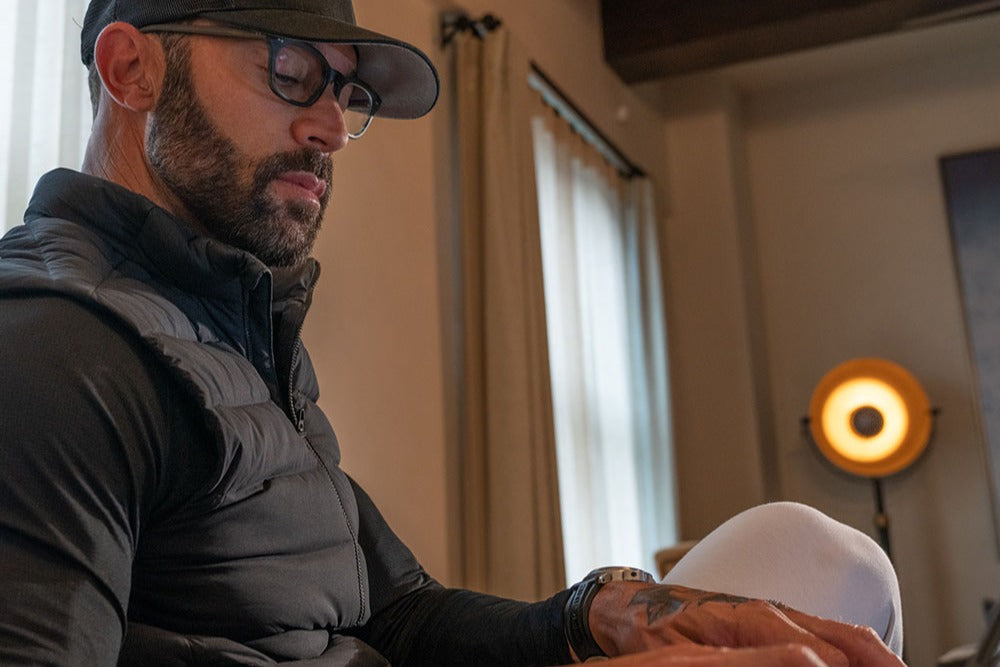
Handmade frames in styles by Raen, STATE Optical and L&F paired with custom-made single vision reading lenses.

Here's something unsettling: your eyes are being damaged by UV radiation, and you can't feel it happening.
Unlike a sunburn on your skin—which hurts, peels, and reminds you to be more careful—UV damage to your eyes is silent. It accumulates day after day, year after year, with no immediate symptoms. By the time you notice problems, decades of damage may have already occurred.
Your eyes don't get a second chance. The harm is cumulative and largely irreversible.
Ultraviolet radiation affects multiple structures in your eye:
The Cornea and Conjunctiva
Short-term, intense UV exposure can cause photokeratitis—essentially a sunburn on your cornea. It's painful, causes temporary vision problems, and typically heals within a few days. Snow blindness and welder's flash are examples.
But even without acute burns, repeated UV exposure contributes to growths on the eye's surface called pingueculae and pterygia. These yellowish bumps or tissue growths are common in people with high lifetime UV exposure.
The Lens
UV radiation accelerates the formation of cataracts—the clouding of your eye's natural lens that eventually requires surgical replacement. While cataracts are often considered an inevitable part of aging, research shows that UV exposure significantly increases your risk and can cause cataracts to develop earlier.
The World Health Organization estimates that up to 20% of cataracts may be caused by overexposure to UV radiation.
The Retina
The retina—the light-sensitive tissue at the back of your eye—can also suffer UV damage. This contributes to age-related macular degeneration (AMD), a leading cause of vision loss in people over 50.
Once retinal cells are damaged, they don't regenerate. The vision loss is permanent.
Here's what makes UV eye damage particularly insidious: it adds up.
Every time you walk outside without eye protection, you're adding to your lifetime UV exposure. A quick trip to the mailbox. Driving without sunglasses. Sitting by a window. Spending time near water, snow, or sand (which reflect UV rays intensely).
None of these individual exposures feels significant. But over 30, 40, 50 years, they compound.
Think of it like a bank account that only accepts deposits. Every unprotected moment outside adds a little more to the balance. And unlike your skin, your eyes can't tan or build up tolerance. They just accumulate damage.
Peak hours: UV radiation is strongest between 10 AM and 4 PM. But it's present whenever the sun is up.
Altitude: UV intensity increases about 10% for every 1,000 meters of elevation. Mountain environments are particularly risky.
Reflection: Water reflects up to 100% of UV rays. Sand reflects about 25%. Snow can reflect up to 80%. Fresh snow at altitude is one of the most UV-intense environments on earth.
Clouds: This is where people get fooled. Clouds block visible light, making it feel darker, but they only filter out about 20-40% of UV radiation. You can still get significant UV exposure on overcast days.
Winter: The sun is lower, but UV is still present. And if there's snow on the ground, reflection can actually increase your exposure.
Here's a critical point: dark lenses without UV protection can actually be worse than no sunglasses at all.
When you wear dark lenses, your pupils dilate to let in more light. If those lenses don't block UV rays, you're allowing more UV radiation into your eye than you would with no sunglasses.
Always look for sunglasses labeled as blocking 99-100% of UVA and UVB rays, or labeled as UV400 (which blocks all rays with wavelengths up to 400 nanometers—the full UV spectrum).
The darkness of the lens has nothing to do with UV protection. A light gray lens can offer 100% UV protection while a very dark lens might offer none. The UV blocking comes from the lens material or coatings, not the tint.
UV protection isn't just for sunglasses. Many clear eyeglass lenses—including most polycarbonate and high-index lenses—block UV radiation inherently.
If you wear prescription glasses, check whether your lenses include UV protection. If you're buying new glasses, make sure UV blocking is included. It's a feature that costs little but matters a lot over a lifetime.
Wear sunglasses consistently. Not just at the beach or on bright days—whenever you're outside during daylight hours.
Choose quality. Ensure your sunglasses block 99-100% of UV rays. Price isn't always an indicator; even inexpensive glasses can offer full UV protection if they're properly made. (Considering polarized? Learn about the trade-offs with screens.)
Don't forget kids. Children's eyes are more susceptible to UV damage because their lenses are clearer and let more UV through. The UV exposure accumulated in childhood contributes to problems that show up decades later.
Consider wraparound styles. Standard sunglasses leave gaps at the sides where UV can enter. Wraparound frames or larger lenses provide more complete coverage.
Wear a hat too. A wide-brimmed hat can block up to 50% of UV radiation from reaching your eyes, even from above and around your sunglasses.
You can't feel UV rays damaging your eyes, and you won't see the consequences for years or decades. But the damage is real, it's cumulative, and it's preventable.
Quality sunglasses aren't a fashion accessory—they're protective equipment for organs you can't replace.